
Clearly defined product
Lengths, connectors, protective elements, labels and revisions need to stay understandable and repeatable.
For industrial cable assemblies, quality means more than a tick on the last inspection sheet. It means a clear configuration, checks at the right point, correct identification, traceability and confirmation that the product reaches the customer ready to use.
We build a clear workflow so that an approved product version can be repeated consistently.
Easy-to-follow configurations and revisions for recurring products.
Visual, dimensional, electrical or functional checks depending on the product.
Clear separation between in-process, approved, held and ready-to-ship parts.
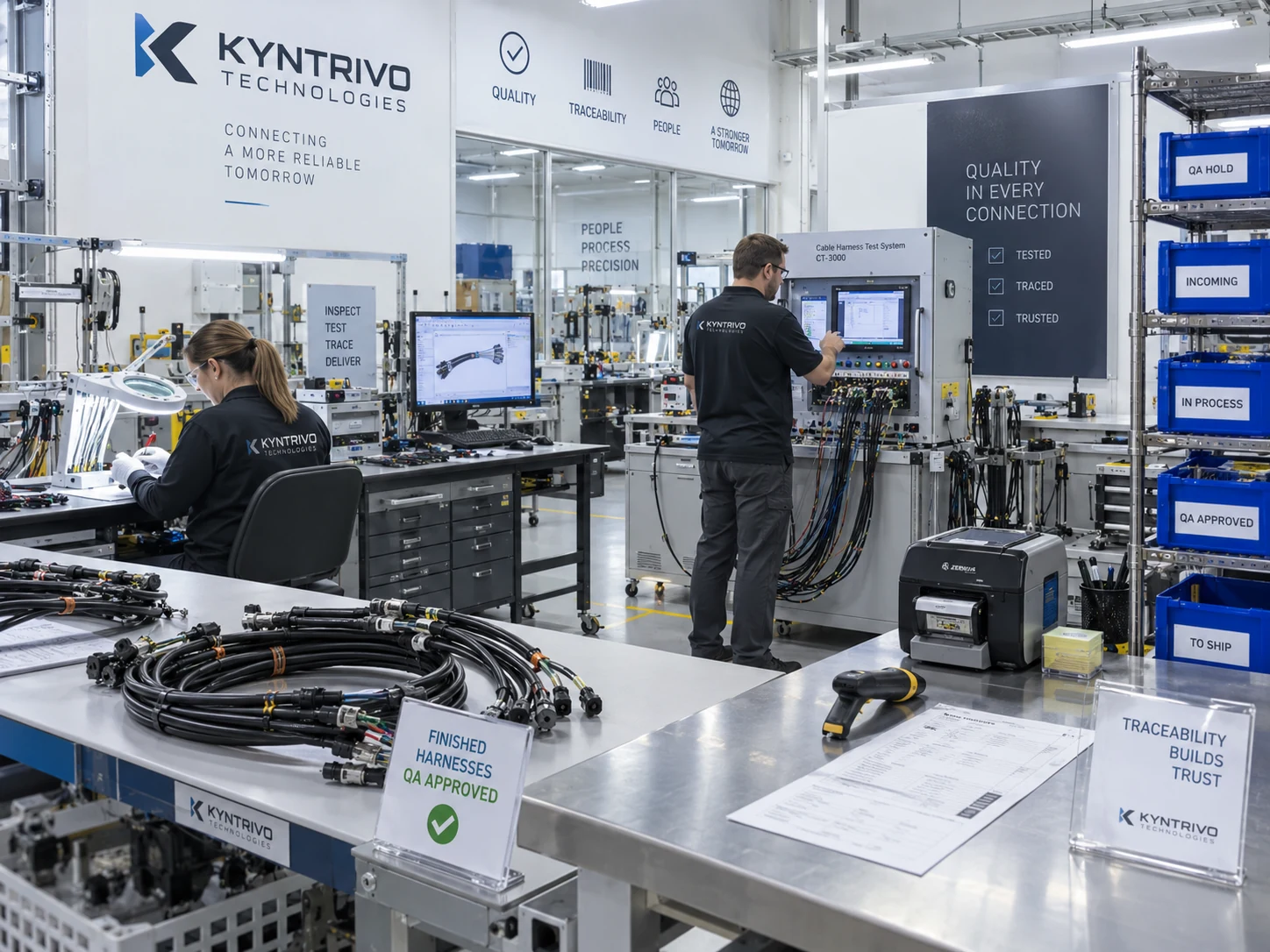
We do not sell quality slogans. We prefer to define what needs to be checked, how the product is identified and which documents or confirmations actually matter for the customer’s application.
Lengths, connectors, protective elements, labels and revisions need to stay understandable and repeatable.
Critical points are checked during the workflow rather than leaving everything until the last moment.
Labels, status control and physical separation help avoid confusion between batches and versions.
The product is checked before packing and shipping, not only after it reaches the customer.
From the first sample through to batch release, we focus on clarity, control and confirmation that the product matches the agreed requirement.

For new or revised products, we prefer an early review of the first part or a small initial batch. This helps confirm that the drawing, sample, BOM and customer expectations have been understood correctly before production is repeated.
The aim is not bureaucracy. The aim is to avoid repeating the same mistake across many parts.
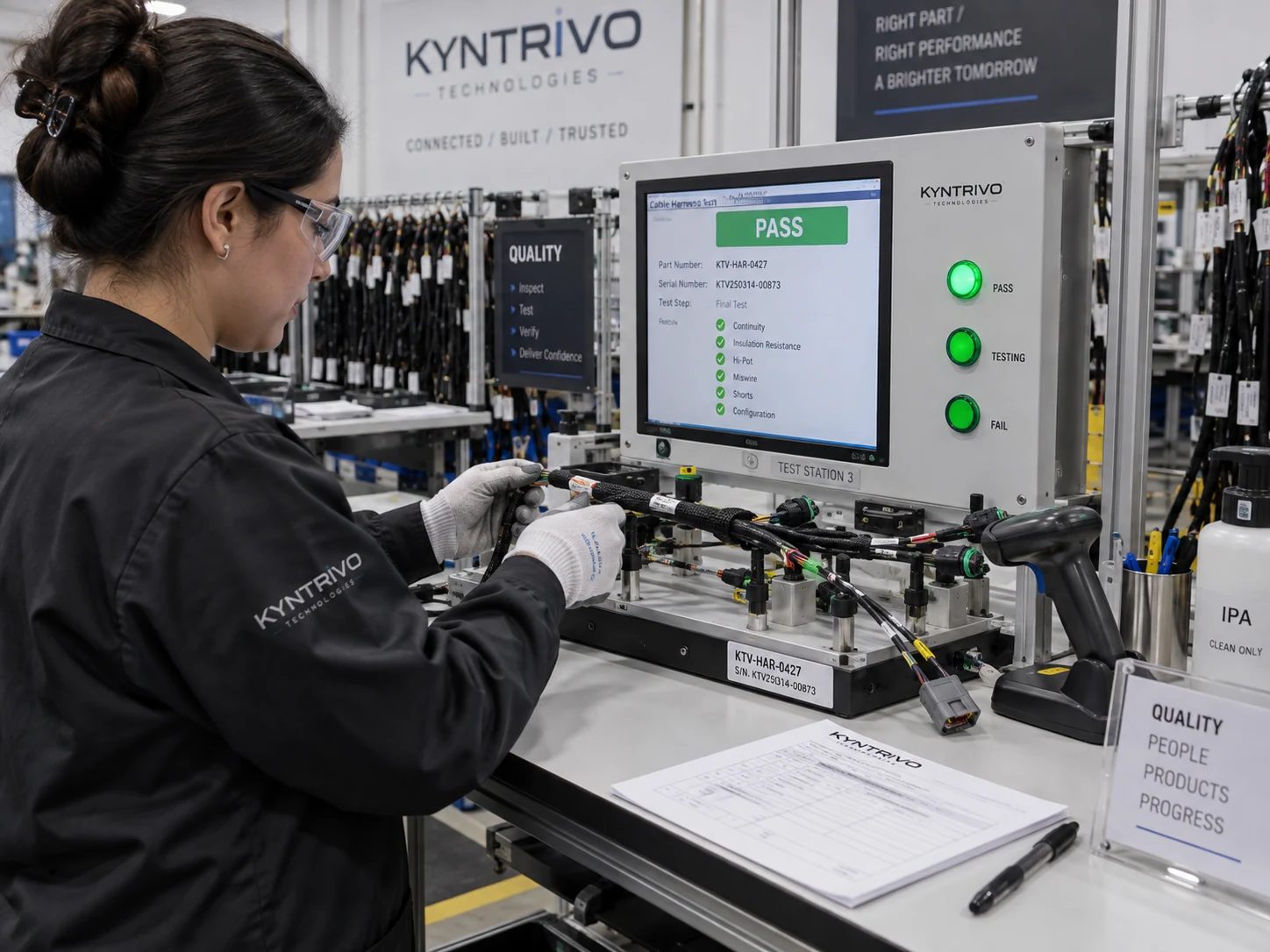
Not every part needs exactly the same controls, but when the product requires it, we include the agreed checks: continuity, pinout, resistance-related checks or other electrical criteria relevant to the application.
We agree up front which test makes sense for the product instead of promising generic checks with little practical value.
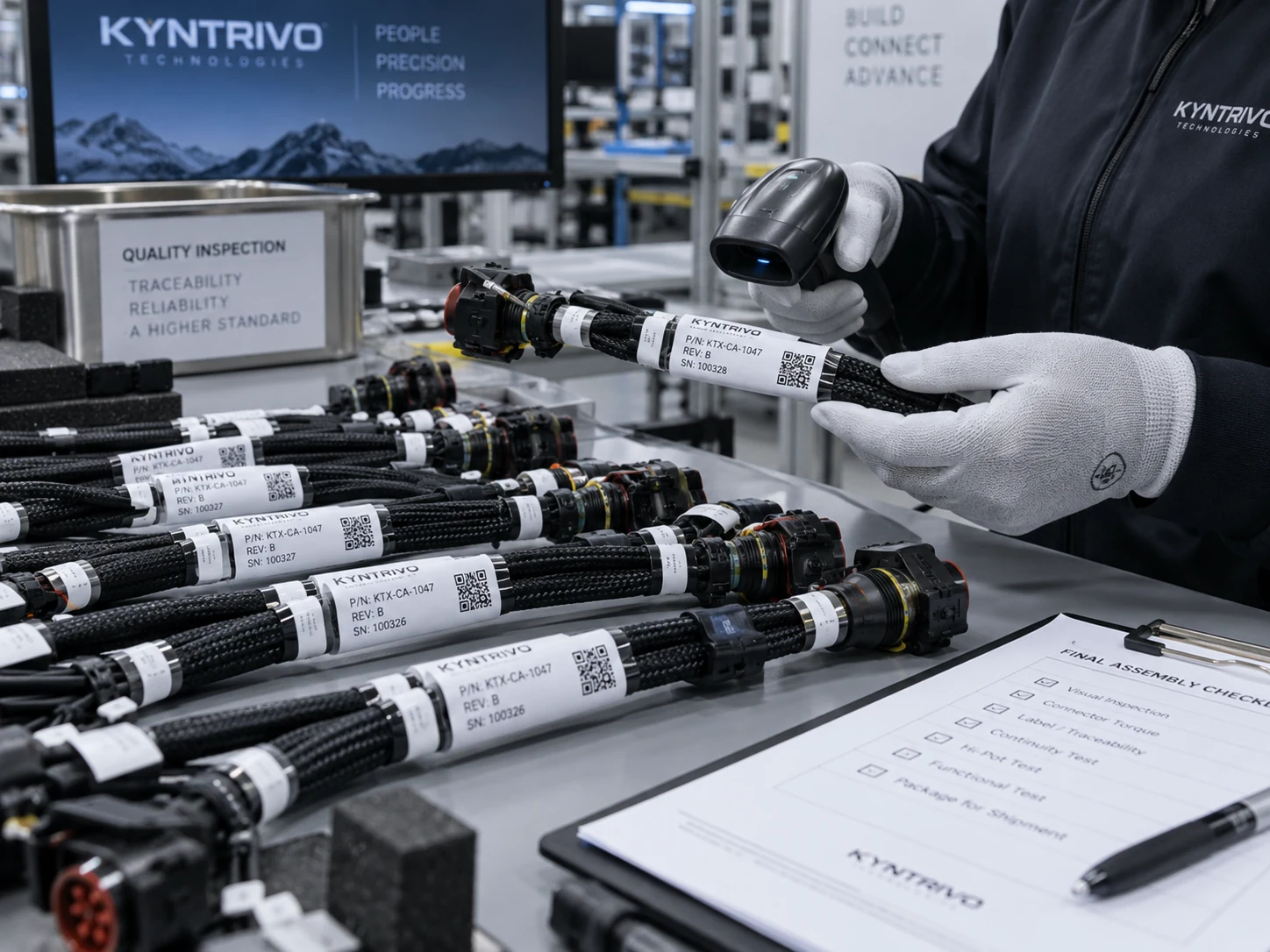
Labelling, version identification and physical separation of parts support batch control and reduce the risk of in-process products being mixed with already approved items.
Traceability does not need to be complicated. It just needs to be clear and useful for the product and the customer.
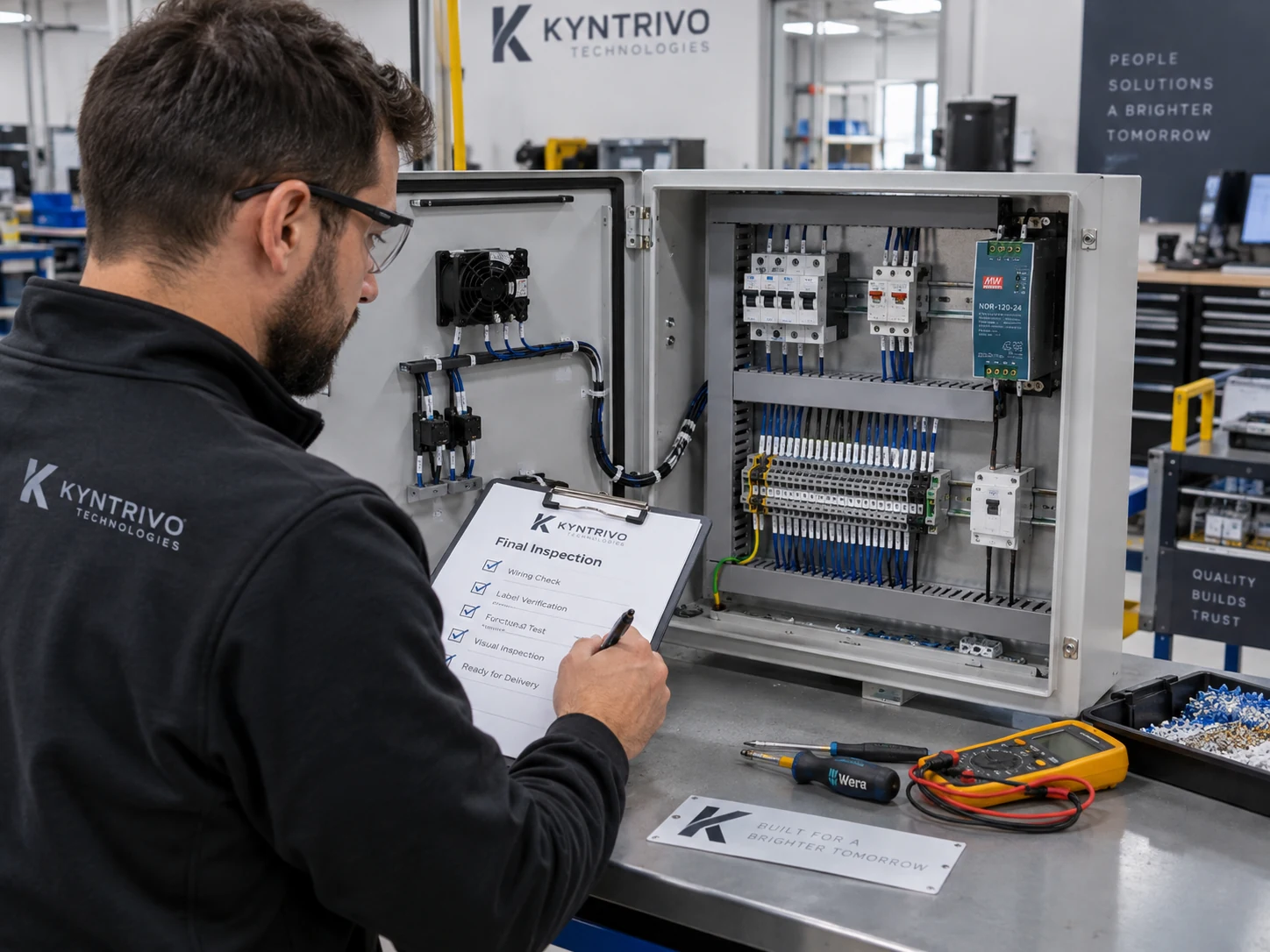
Before delivery, the product is checked again against the agreed configuration. We confirm the build quality, identification and overall condition of the assembly so that the customer receives a part that is ready to use with confidence.
Final inspection does not fix the whole process on its own, but it does confirm that the delivered batch matches what was agreed.

Many cable assembly problems start with details that look minor: the wrong length, an incorrect label, poor order in the flow or a connection made differently from the approved version. That is why we value simple, clear and repeatable checks.
We do not claim certifications or capabilities that we do not have. If a project requires a special standard, process or document, we discuss openly whether we can support it properly.
For many industrial applications, the customer does not only need a part that passes a test. They need a part that is identifiable, consistent and ready for assembly or integration.
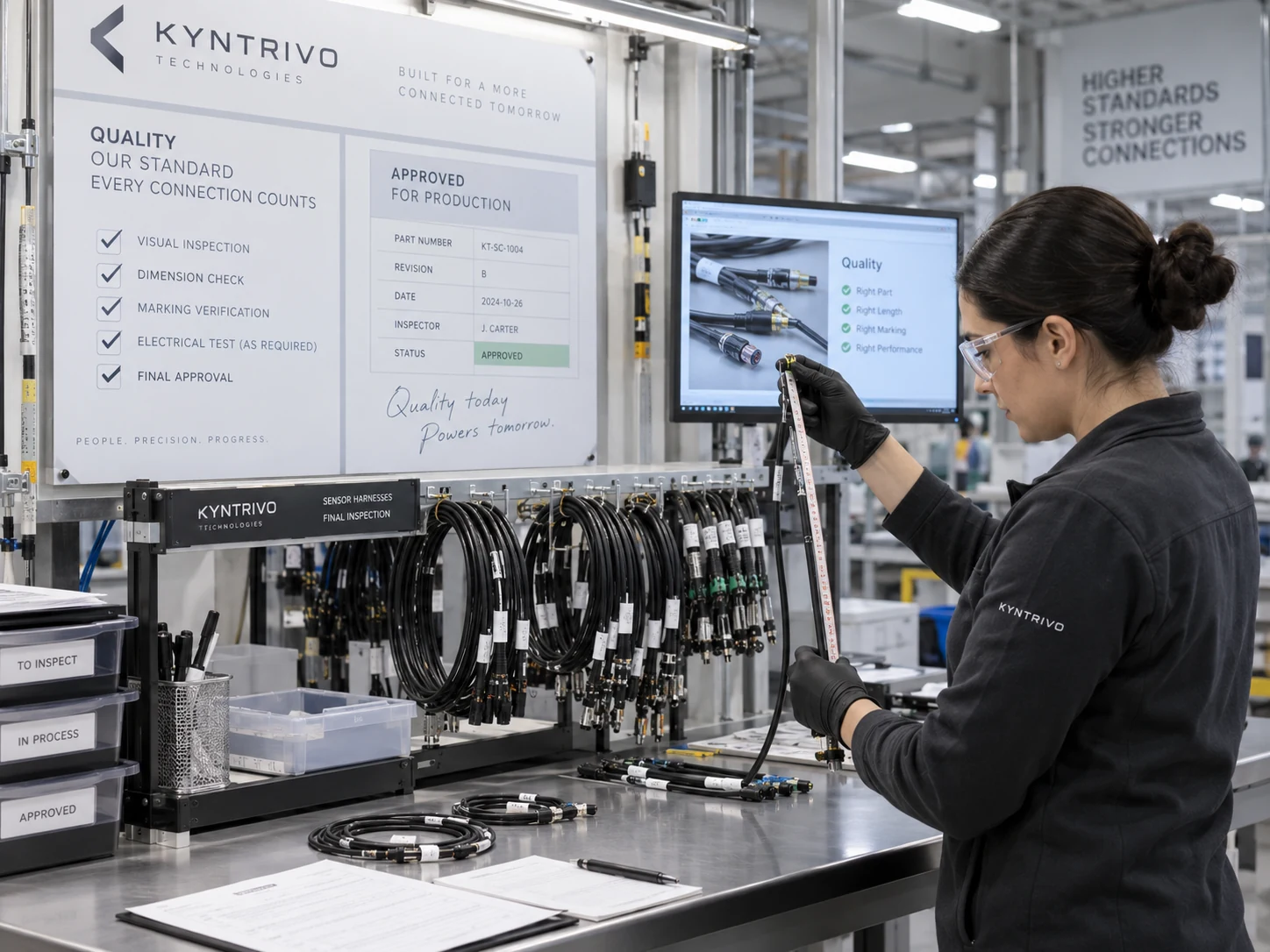
Lengths and configurations maintained in line with the approved version
Consistent labels and markings where they are part of the product
Clear separation between approved parts and in-process parts
Confirmation of relevant checks before packing
An organised flow that reduces the risk of mixing batches
Early discussion of special quality or documentation requirements
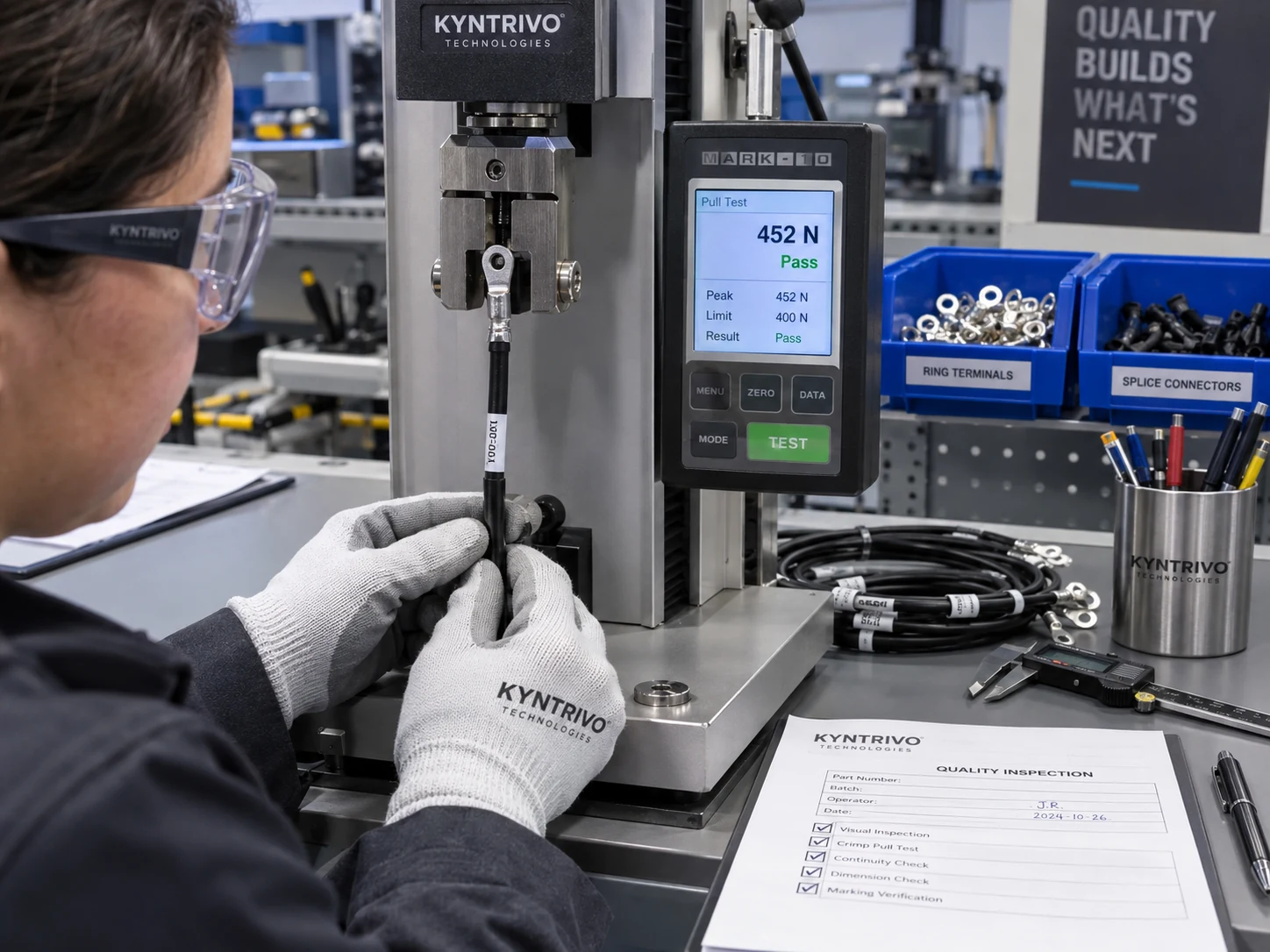
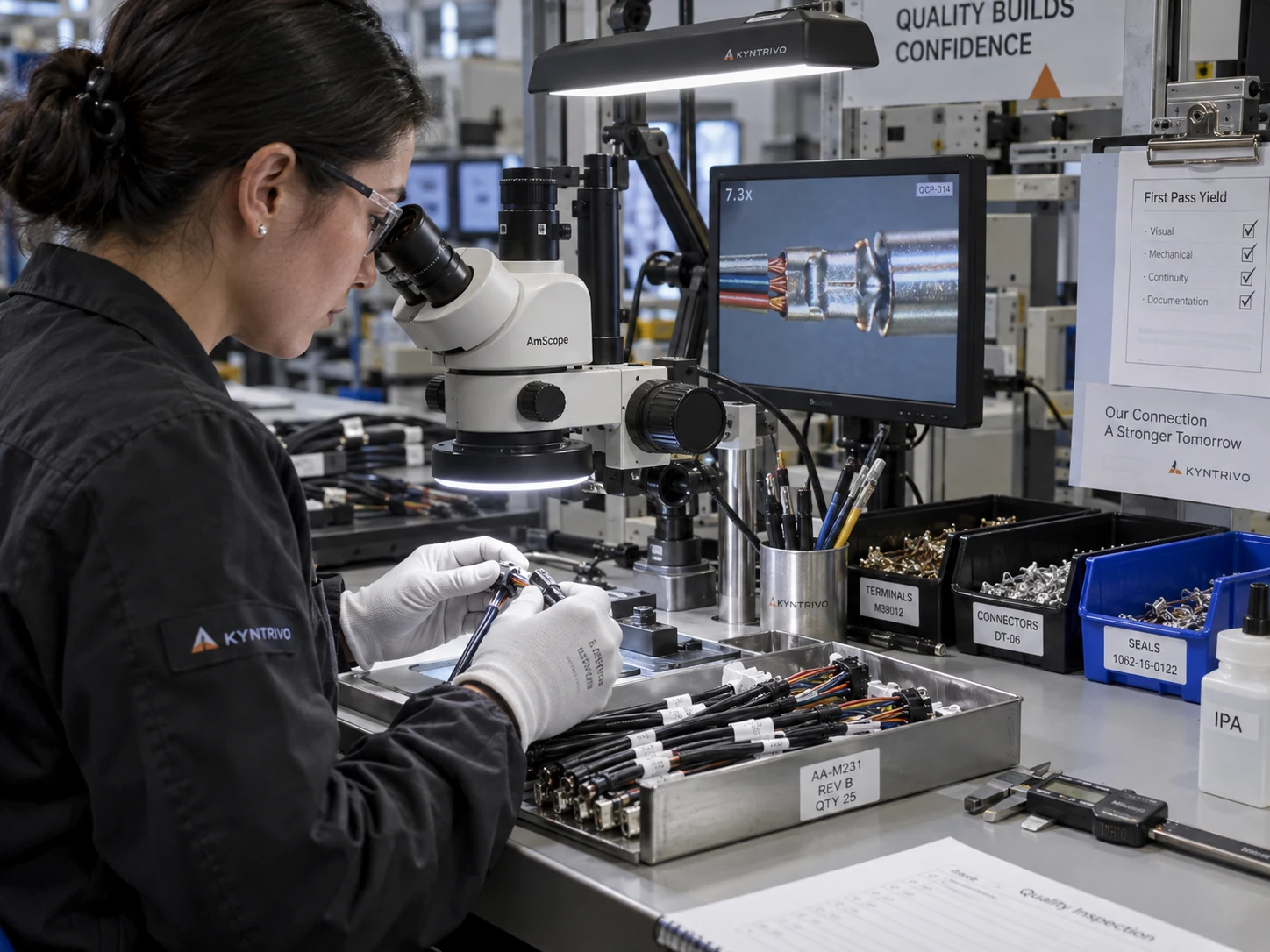
For some applications, verification may include simple mechanical tests, closer inspection of workmanship or focused checks on sensitive details of the product. What matters is that the method fits the product instead of looking impressive without adding value.
For some terminations or connection elements, mechanical or pull-related checks may be relevant.
When the product or application requires it, certain details can be reviewed more closely before approval.
We do not overload a project with unnecessary controls, but we also do not oversimplify when the product needs more attention.
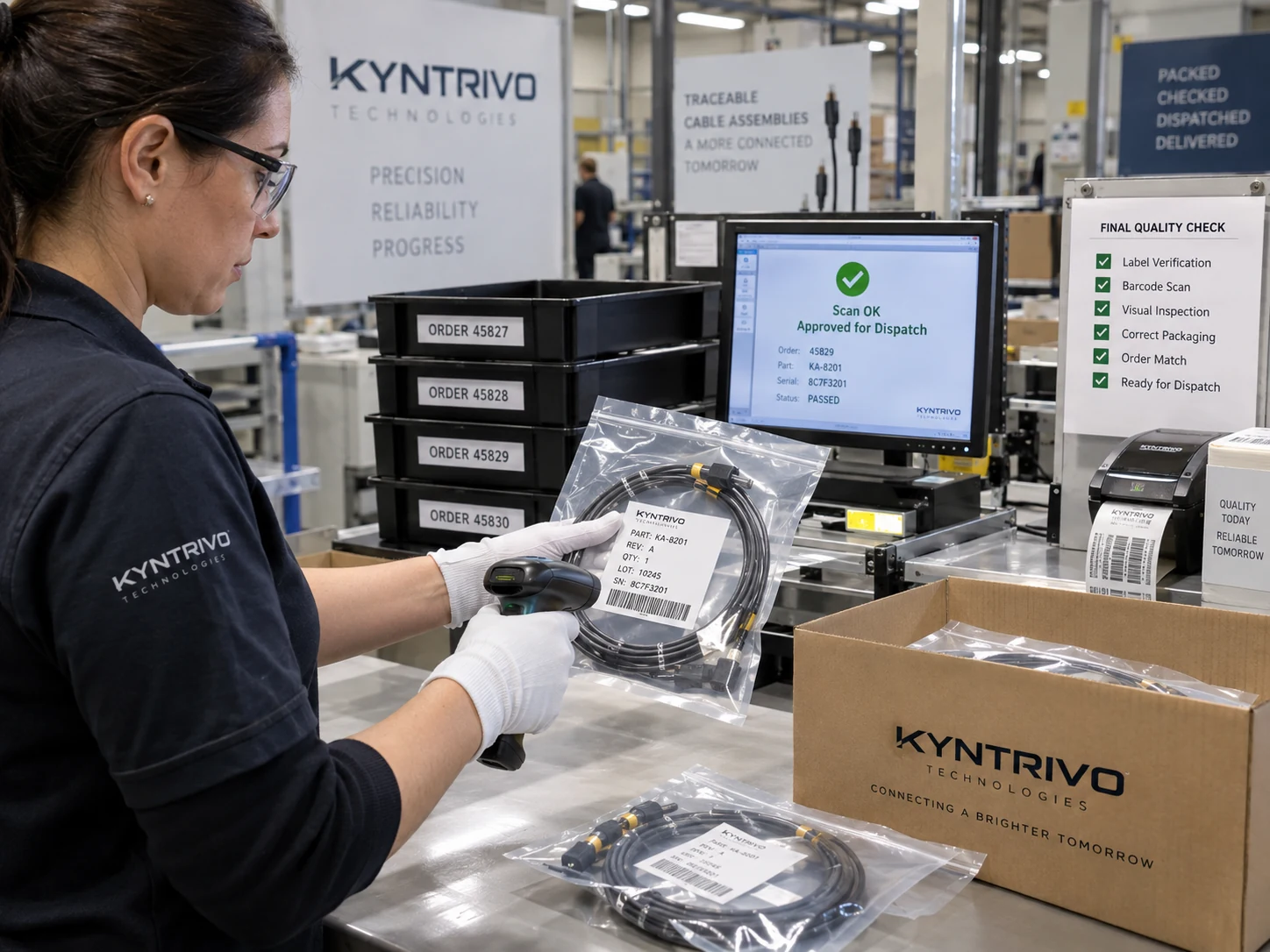
After inspection and approval, parts can be identified, scanned and packed in an organised way. This matters especially for recurring deliveries where the customer wants to recognise product status quickly.
The approved product is confirmed before it moves into packing or dispatch.
Parts can be prepared so that their identification remains clear even after delivery.
A clearly labelled and organised product is easier to receive, review and release into assembly.
We do not apply the same rigid checklist to every product. We use clear working principles, but the right checks and documents depend on the product, the application and the customer requirements.
Yes, if they are discussed early and if we can support them properly. It is much easier to define them before production starts than after the first batch.
Yes, where the product requires them and where they are part of the agreed requirement. We do not treat every part the same; we choose checks that are relevant to that configuration.
Through clear identification, labelling, separation of parts by status and confirmation of the product version before release.
No. We would rather be clear about what we can support today. If a project requires a special condition, we discuss it openly before accepting the work.
Because it is the best stage for clarifying misunderstandings about the configuration, workmanship and customer expectations before the product goes into repetition.
Send us the project together with your expectations. We can discuss what should be checked, how the product should be identified and which information matters for recurring batches.