We start with what you already have
A drawing, BOM, photographs, an existing sample or a combination of these. The first conversation does not need a perfect documentation pack.
We build cables and wire harnesses for machine builders, system integrators and technical teams that want to take repetitive wiring work out of their own assembly process. We can start with a complete drawing or, just as practically, with an existing sample and a few explanations.
Prototypes, small and medium batches, and recurring configurations.
Sensor and actuator cables
Custom wire harnesses
Prepared cable sets for panels and equipment
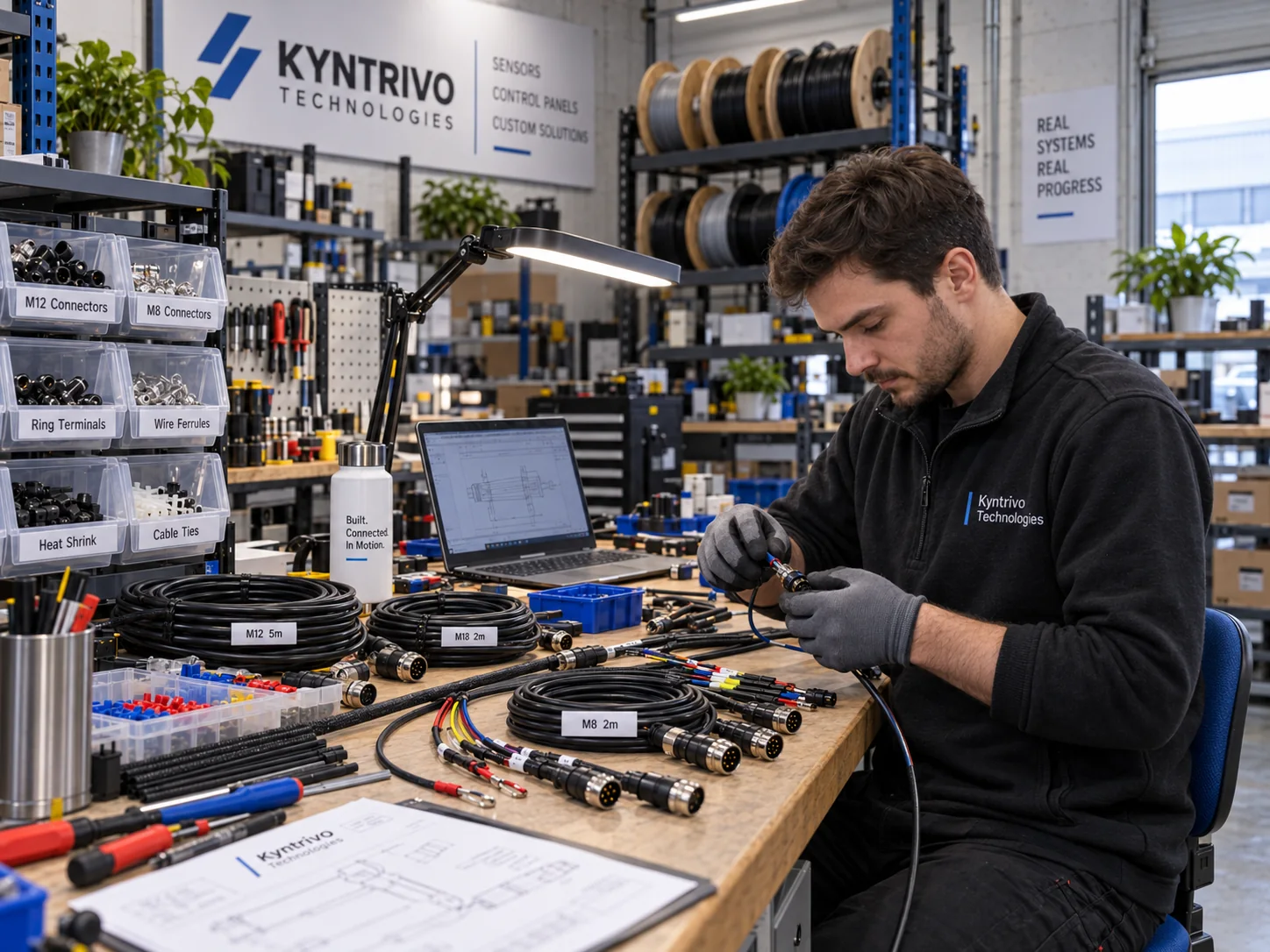
For the customer, the value is not in the number of metres of cable. It is in receiving the right length, the right connections, clear identification and a part that is ready to integrate. That is why we focus on products we can understand, document clearly and reproduce consistently.
A drawing, BOM, photographs, an existing sample or a combination of these. The first conversation does not need a perfect documentation pack.
The first part helps confirm lengths, branches, labels and practical details before the product becomes a recurring item.
Once approved, the product can have a clear reference so the next order does not have to start from zero.
These are the product groups around which we want to build recurring customer relationships: easy to integrate, flexible enough for custom applications and well suited to industrial B2B production.
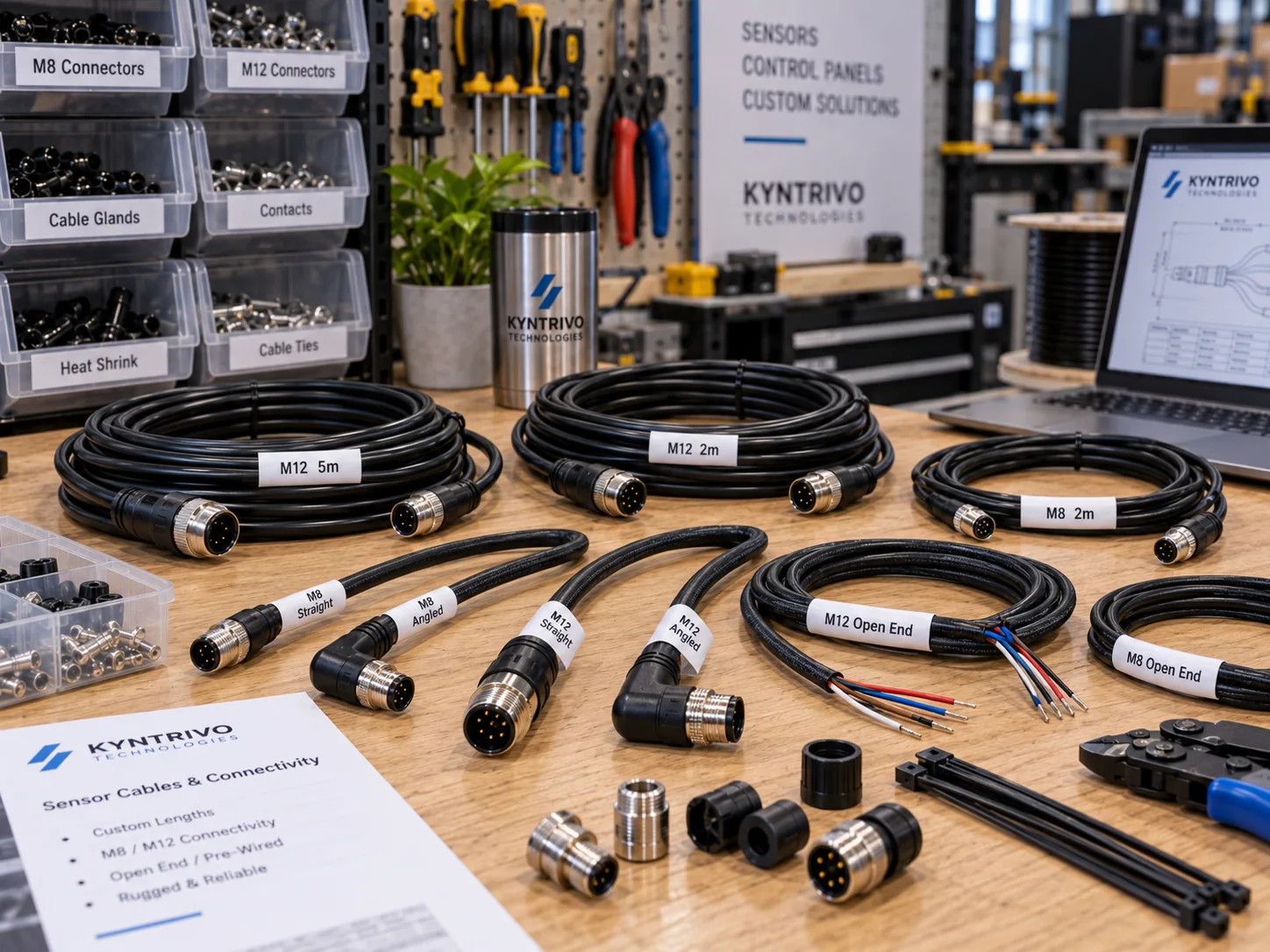
We prepare connection cables for sensors, valves, actuators and other components used in machinery and automation systems. These can be connector-to-connector cables or versions with an open end, depending on how the cable is installed in the equipment.
Suitable for sensors, valves, I/O, pumps, conveyors and automation equipment.
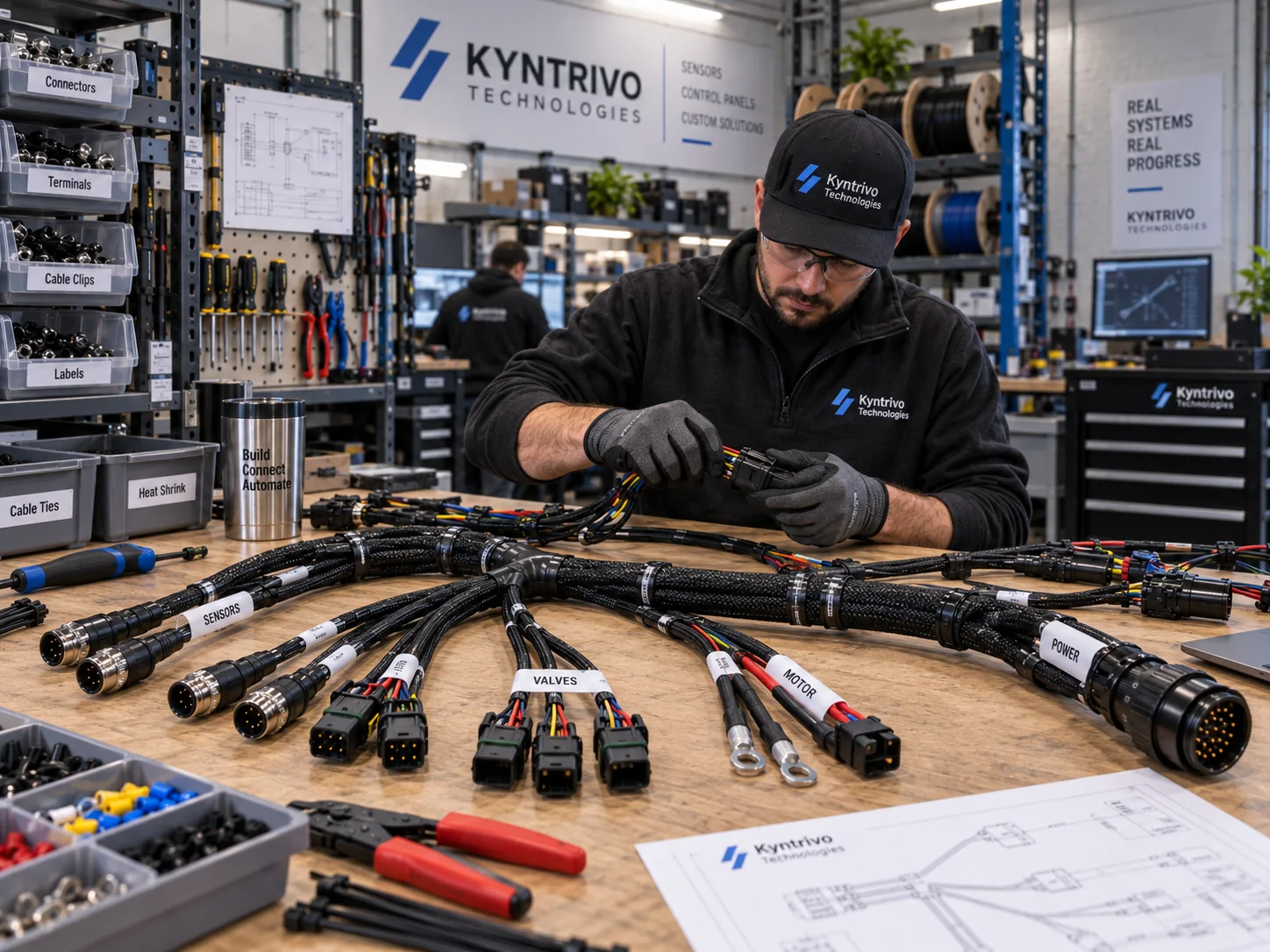
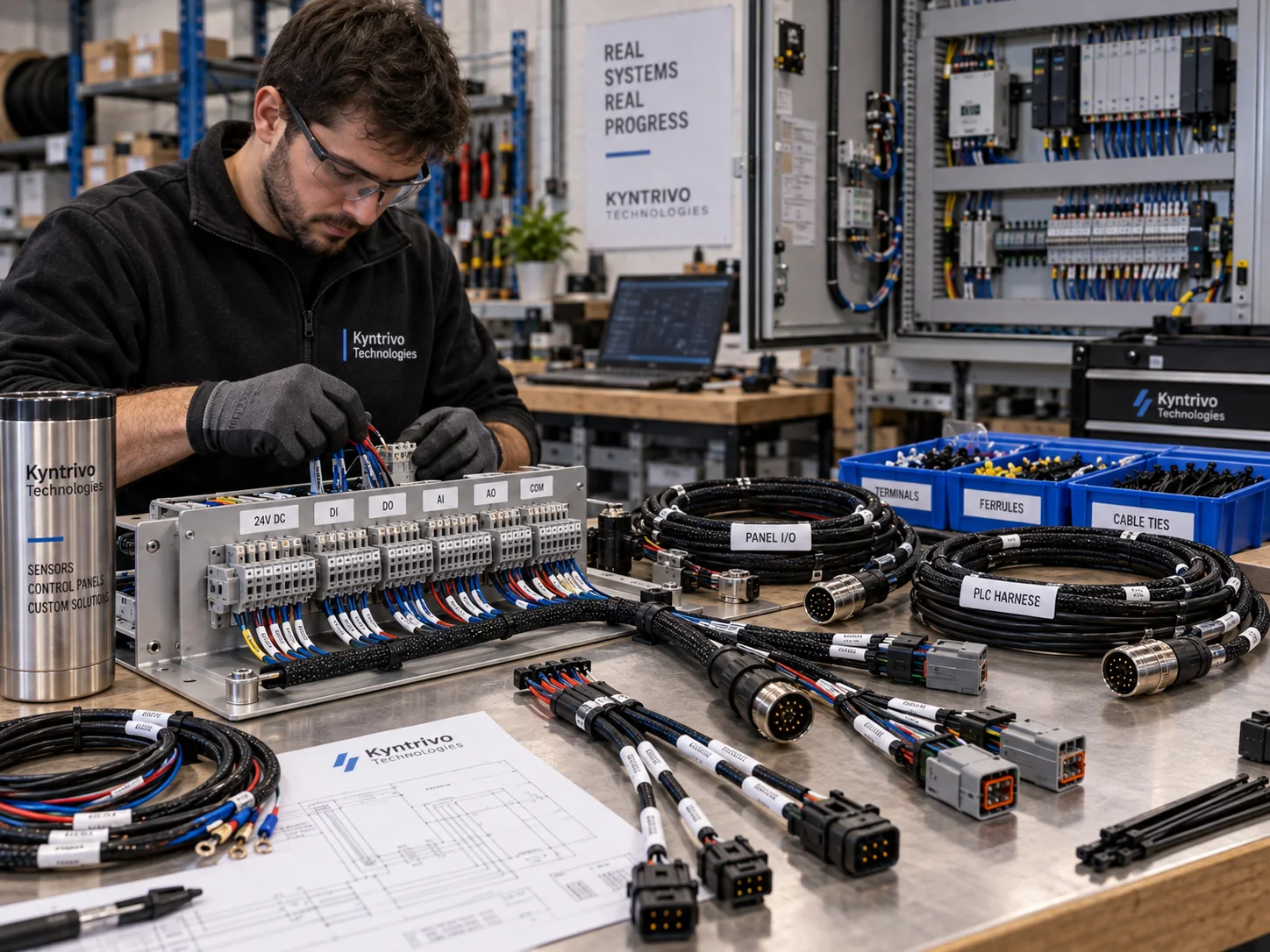
When a machine has several connections that repeat from one unit to the next, we can combine them into one prepared harness. Instead of rebuilding the same network of wires directly on every machine, the customer receives one organised and clearly identified assembly.
Suitable for machine builders, OEMs, integrators and special-purpose equipment built repeatedly.
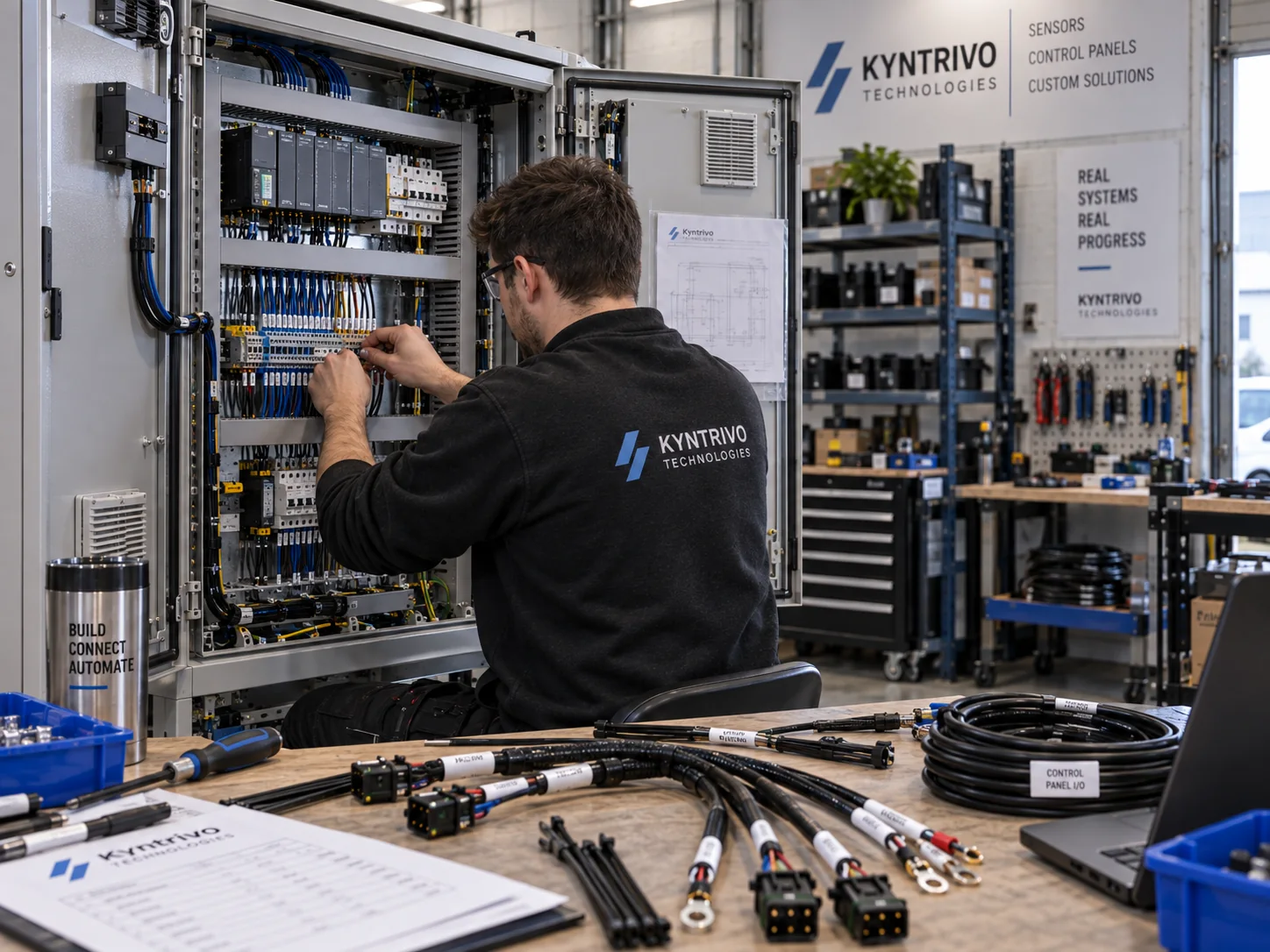
For repetitive work inside panels and equipment, wires and cables can be cut, terminated and labelled before they reach final assembly. The goal is straightforward: your team receives an organised set and does not have to repeat the same preparation on every unit.
Suitable when you want repetitive manual wiring work moved out of final assembly.
Sometimes the customer has a complete drawing. In other cases there is only a part fitted to a machine, a component list or a harness that has been built internally for years. What matters is having enough information to understand the application and define a version that can later be rebuilt without interpretation.
We review what already exists and identify the information that still needs to be clarified before the first build.
Lengths, labels, connectors and branches should be easy to recognise for both production and the customer.
If the product evolves, changes should be tied to a clear revision so different versions do not become mixed.
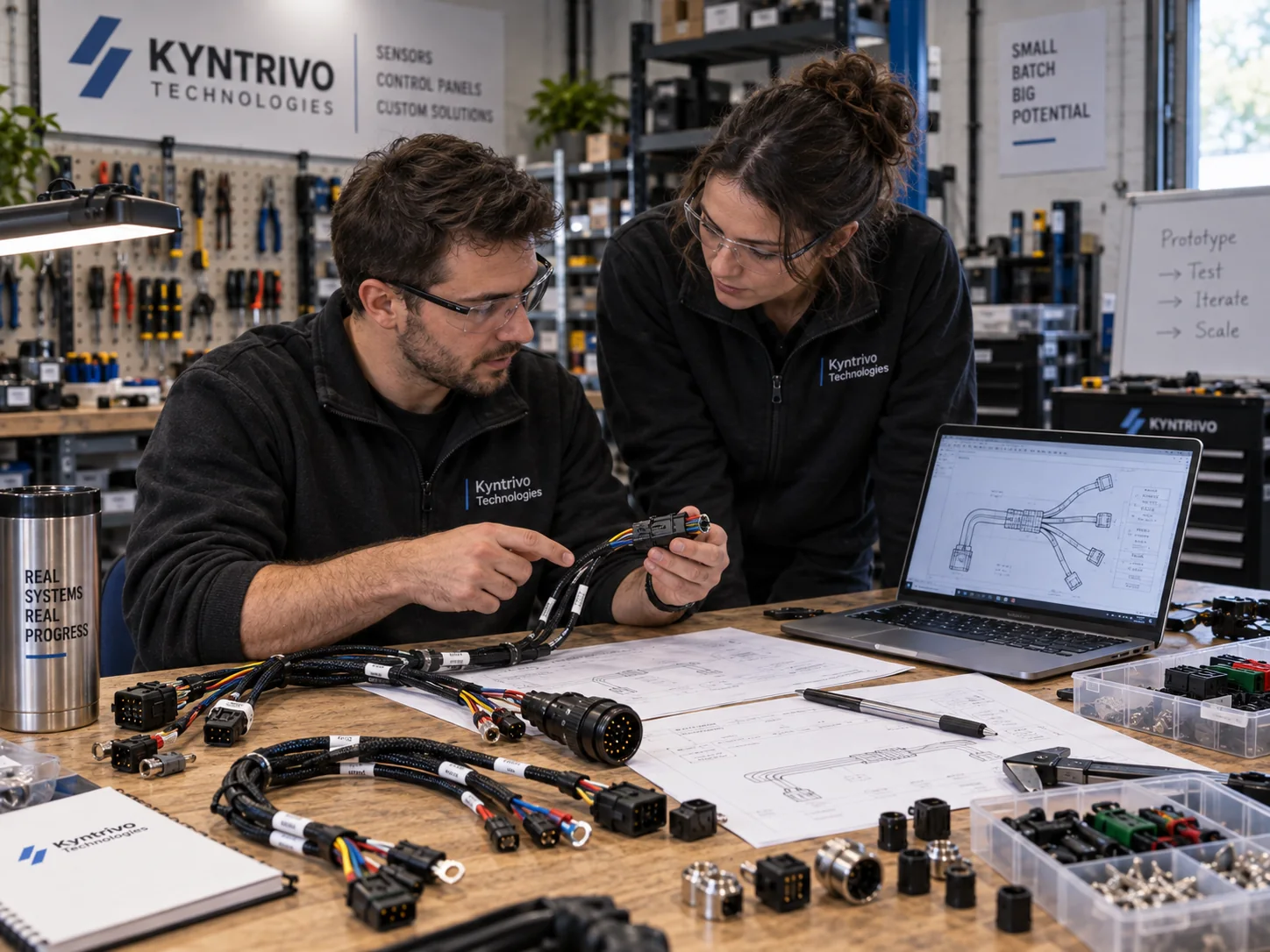
You do not need a thousand-piece order on day one. For many industrial applications, it is healthier to validate the product in a small batch first and then build a reliable routine around recurring orders.
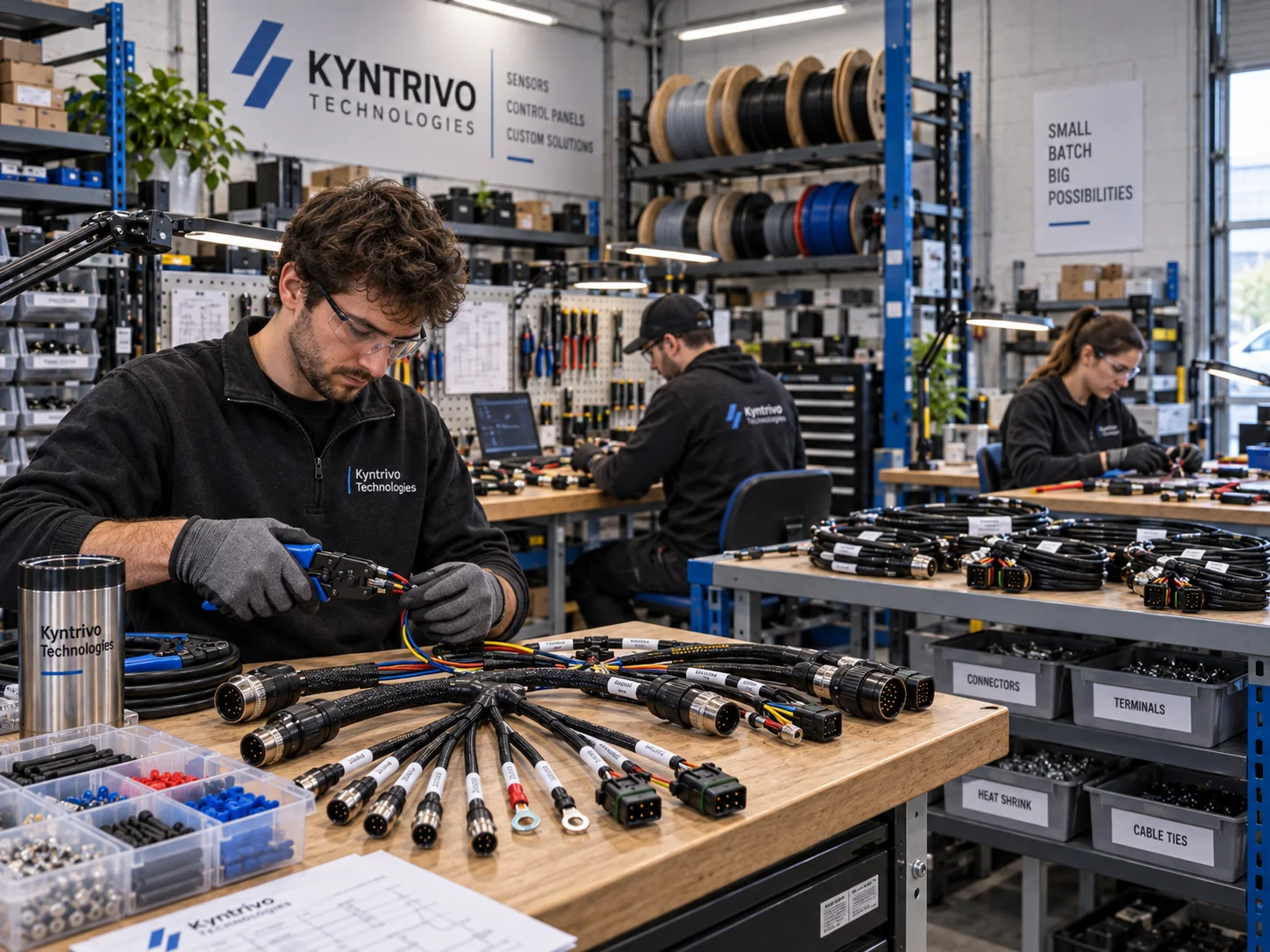
For a new product, a first part helps confirm the details before recurring production begins.
A good fit for machinery and equipment that is not mass-produced but still needs the same part repeatedly.
Once the configuration is stable, future batches can start from the same approved version.
A drawing, BOM, photos, a sample and an approximate quantity. Even partial information is enough to start a useful conversation.
We look at connections, lengths, materials, component availability and any requirement that should not be changed.
We prepare a sample or initial small batch that can be checked in the real equipment.
If a length, label or branch needs changing, it is better to do that before the product becomes a recurring item.
The final configuration becomes the reference point for future orders and any later revisions.
Future batches start from a known configuration, making the relationship simpler for both sides.
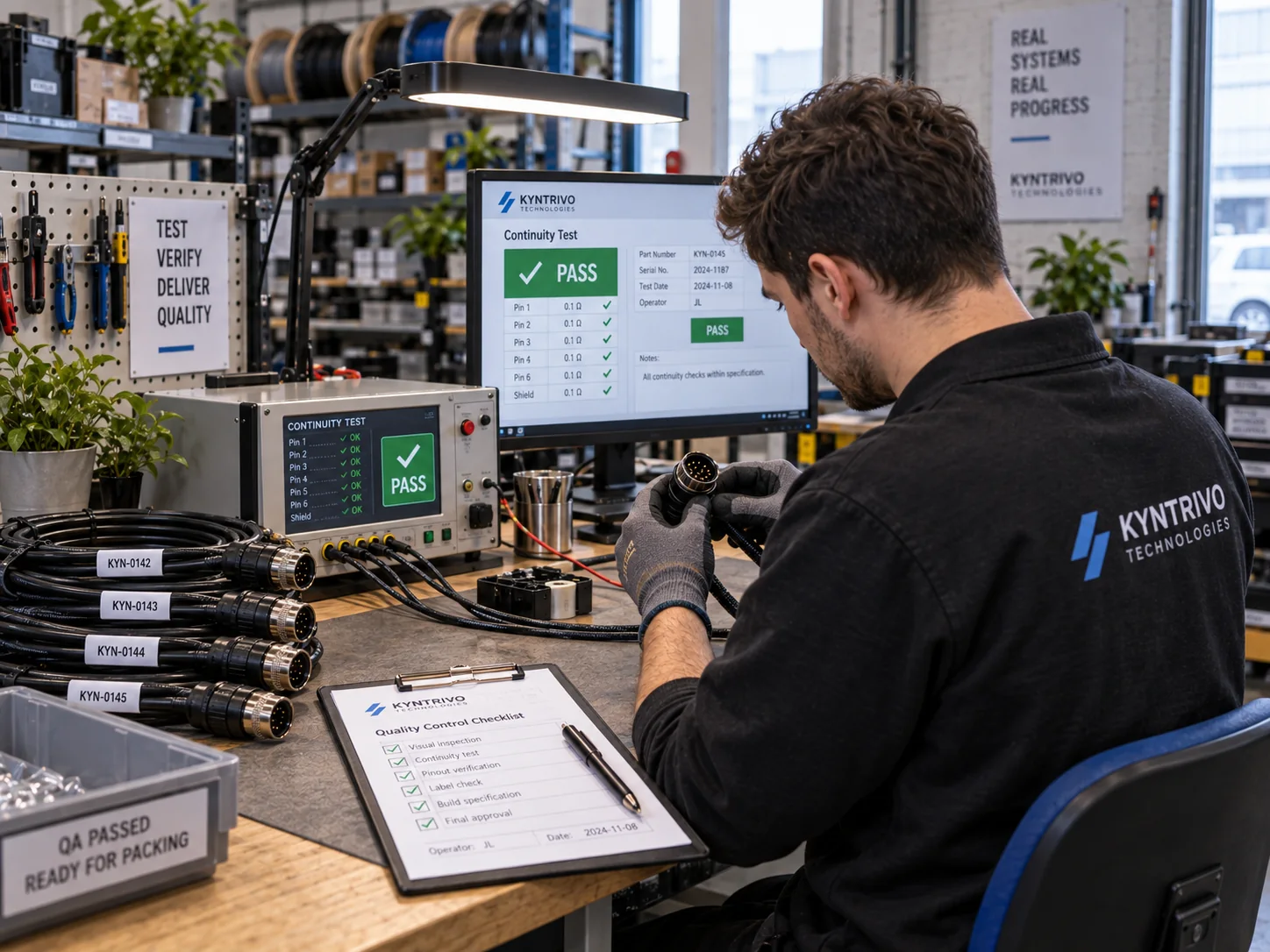
For each product, we agree the checks that make sense for the application. This would typically include visual inspection, confirmation of the configuration and labels, and the electrical checks agreed for that particular product.
If the project has its own acceptance criteria, documentation or additional checks, these are agreed before production begins.
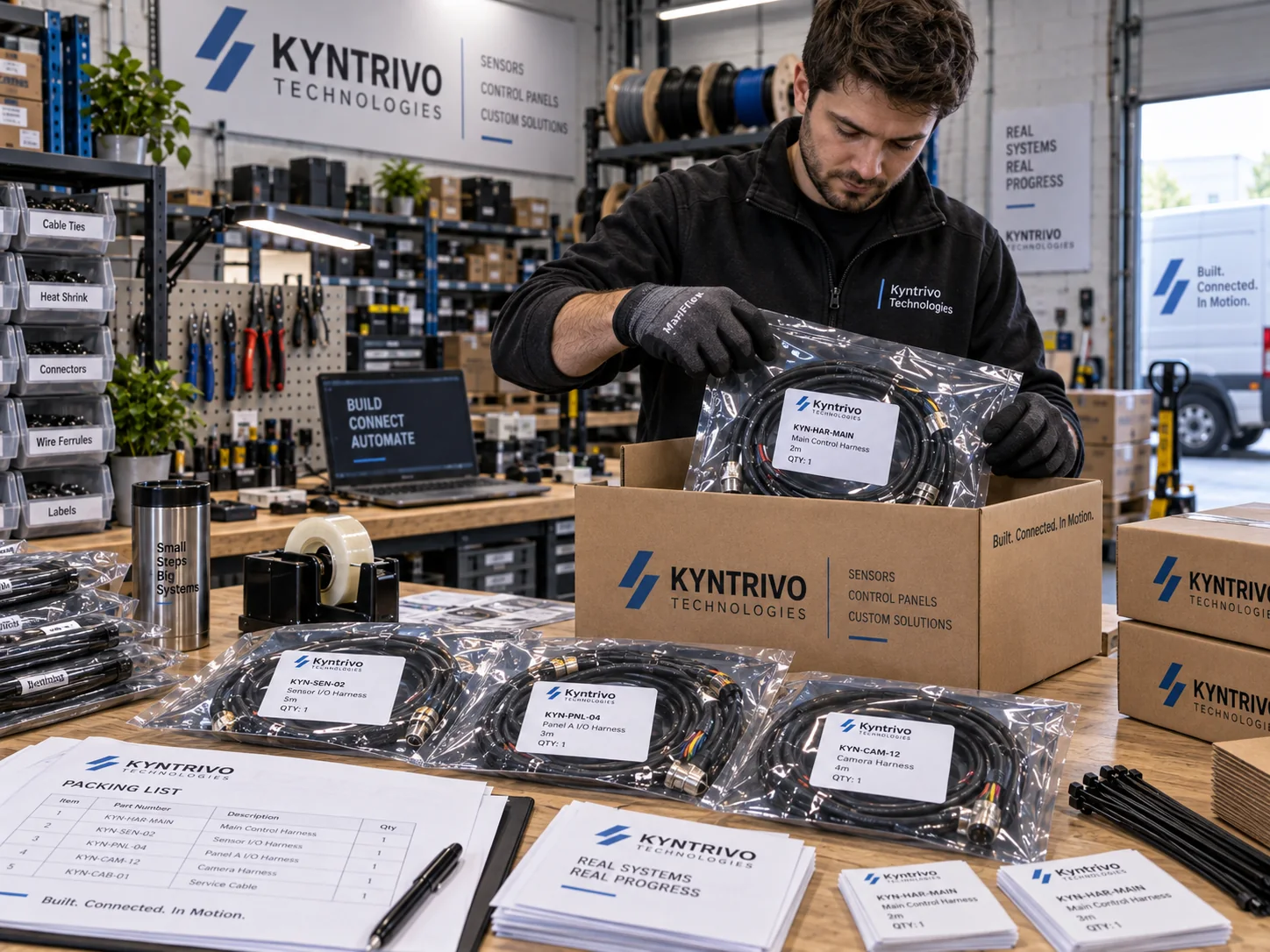
For a B2B customer, it is not enough for the part to be assembled correctly. It should also be easy to identify, store and pass on to assembly. Packaging and labelling can therefore be organised around the way you actually use the product.
Internal part number, revision, destination or other information that helps identify the item.
Products can be grouped logically by machine, panel or assembly operation.
Clear separation between products and revisions reduces confusion at goods-in and during assembly.
There is no need to prepare a special presentation. The sooner we can see the real application, the sooner we can tell whether it is a good fit for us.
Discuss your project with usA drawing, BOM, photographs or an existing sample
Approximate quantity and whether the part will be recurring
Lengths and connections that are already fixed
Any special material, labelling, testing or packaging requirements
The approximate date you need the first part or batch
The service is not one single step. It is about turning a configuration into a part that can be built, checked and delivered again whenever the customer needs it.
No. A drawing is helpful, but we can also start from an existing sample, photographs or a component list. If essential information is missing, we clarify it before the first build.
Yes. For new projects, a first part or very small initial batch is often the most sensible step before recurring orders begin.
No. M8 and M12 are simply common examples for sensor cables. For custom harnesses, we can review other connector families and terminations depending on the application and component availability.
In many cases that is the best place to start. If your product already uses approved components, we include them in the project review before quoting.
Yes. Labelling can be adapted to the project, including references and markings that help with assembly and identification, provided they are defined at the start.
We treat the change as a new revision. That keeps the current version clear and avoids accidentally mixing it with earlier batches.
Send us what you already have. If the project fits the way we work, the next step is straightforward: clarify the details and prepare the first version.